
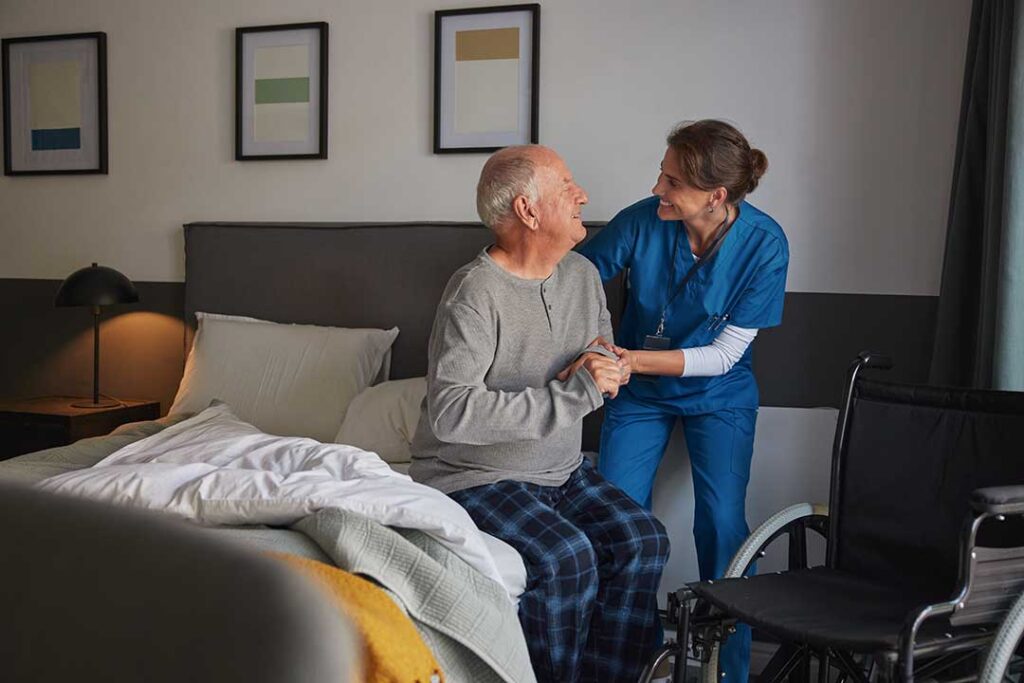
Assisted living technology is not meant to replace personal care. Its purpose is to help residents remain safer, more independent, and better connected while giving caregivers useful information for daily support.
In Palmyra, PA, technology may be especially helpful for older adults who want a balance between privacy and assistance. Tools can support medication routines, emergency response, communication, movement, and health monitoring. The most appropriate technology depends on a resident’s abilities, preferences, medical needs, and comfort with devices.
What does technology do in assisted living?
Technology in assisted living helps staff and residents manage everyday tasks, respond to concerns, and communicate more efficiently. Some systems are visible, such as tablets or emergency call buttons. Others work quietly in the background, such as sensors that detect unusual movement or changes in routine.
Common uses include:
- Emergency response buttons or wearable pendants
- Medication reminders and electronic medication records
- Motion, door, or room sensors
- Video calls with family members
- Digital care notes shared among authorized staff
- Electronic access systems
- Fall-detection devices
- Health-monitoring equipment
- Online calendars for activities, appointments, and transportation
These tools are generally most useful when they support a clear care plan. A device should solve a practical problem rather than be added simply because it is new.
Can technology help residents stay independent?
Yes. Carefully selected tools can allow a resident to complete more tasks without constant hands-on assistance. For example, a large-display clock may help someone keep track of the day, while a reminder system can prompt a person to take medication, attend an activity, or prepare for transportation.
Technology may also reduce the need to ask for help with routine questions. A resident could use a tablet to check an activity schedule, send a message to a family member, or join a video conversation.
Independence does not mean managing everything alone. In assisted living, independence often means having choices, understanding what is happening, and receiving help only where it is needed.
How is technology used for safety?
Safety systems can provide an additional layer of support, but they are not a substitute for attentive staff or a resident’s own judgment.
Emergency call systems allow residents to request assistance from a room, bathroom, common area, or outdoor space, depending on the system’s design. Wearable devices may be useful for people who do not remain near a wall-mounted call button.
Some communities use sensors to identify unusual patterns, such as a resident leaving a room at an unexpected time or not moving through a usual morning routine. These systems may alert staff to check on the person. They do not always identify the reason for the change, so a personal assessment is still necessary.
Fall detection can be helpful in certain circumstances, but it is not perfect. Devices may miss a fall, create a false alarm, or be removed by the wearer. Residents and families should ask how alerts are reviewed and what happens after a signal is received.
Does technology replace caregivers?
No. Technology can organize information and provide alerts, but it cannot reliably understand pain, fear, confusion, loneliness, or a subtle change in mood.
A staff member may notice that a resident is eating less, avoiding an activity, or speaking differently. That kind of observation often requires conversation and familiarity. Digital records can support this work, but they should not replace human interaction.
Technology is most effective when caregivers use it as one part of a broader approach that includes personal observation, communication, assistance with daily activities, and respect for resident preferences.
How can technology support medication routines?
Medication technology may help reduce missed doses, duplicate documentation, and confusion about schedules. Depending on the care arrangement, staff may use electronic records to document when medication was administered and to identify timing requirements.
Residents and families should understand that a reminder is not the same as medication management. A reminder may tell someone that medication is due, while medication management may involve storage, preparation, administration, monitoring, and documentation.
Questions worth asking include:
- Who is responsible for giving the medication?
- How are missed or refused doses documented?
- What happens if a device stops working?
- How are medication changes communicated?
- Can a family member receive updates, and under what privacy rules?
The answers should match the resident’s medical needs and the level of assistance provided.
What role does technology play in communication?
Digital communication can help residents remain connected with family members who cannot visit regularly. Video calls may allow relatives to participate in birthdays, care discussions, religious observances, or ordinary weekly conversations.
Some residents may prefer simple phones, audio calls, printed notes, or in-person visits. Hearing loss, vision changes, memory concerns, limited dexterity, and unfamiliarity with touchscreens can affect how useful a device is.
Helpful accessibility features may include:
- Larger text and high-contrast displays
- Simple menus with fewer steps
- Stronger volume and captioning
- Voice commands
- Styluses or larger touch targets
- Written instructions kept near the device
A complicated system can create frustration. Ease of use matters more than the number of available features.
What privacy concerns should families consider?
Residents have a right to understand how information about them is collected, stored, shared, and protected. This includes health information, activity records, location data, video, and emergency alerts.
Before agreeing to a technology-based service, families can ask:
- What information does the system collect?
- Who can view it?
- How long is it retained?
- Is video or audio recorded?
- Can the resident refuse or withdraw consent?
- How are family members included?
- What happens if the system is hacked, damaged, or unavailable?
Privacy discussions should include the resident whenever possible. A safety feature may be useful, but it should not unnecessarily remove personal dignity or control.
What happens during power or internet outages?
Technology should have a backup plan. Seasonal storms, heavy snow, high winds, and other weather conditions can affect electricity or internet service in the area. Emergency systems should not depend on a single connection without contingency procedures.
Families may ask whether a device has battery backup, how long it operates without power, and how staff respond if wireless systems go offline. A written backup process may include direct checks, landline communication, battery-powered equipment, or other non-digital methods.
The same principle applies to medical records and contact information. Important details should remain accessible if a computer system is temporarily unavailable.
How should residents and families evaluate new technology?
Start with the resident’s actual needs. A person who occasionally forgets appointments may need a simple calendar reminder, while someone at risk of wandering or falling may require a more structured safety plan.
A useful evaluation considers:
- Whether the resident can operate the device
- Whether staff can respond to alerts promptly
- Whether the system works in all necessary areas
- Whether it respects privacy and consent
- Whether there is a backup if it fails
- Whether the cost and maintenance are clearly explained
- Whether the resident finds it reassuring or intrusive
Technology should be introduced gradually. Demonstrations, written instructions, and repeated practice can make unfamiliar tools less intimidating. Families should also watch for signs that a device is increasing confusion rather than reducing it.
The most meaningful benefit of technology is not automation for its own sake. It is the ability to support safer routines, clearer communication, and appropriate independence while preserving the human attention that makes assisted living feel personal.
