
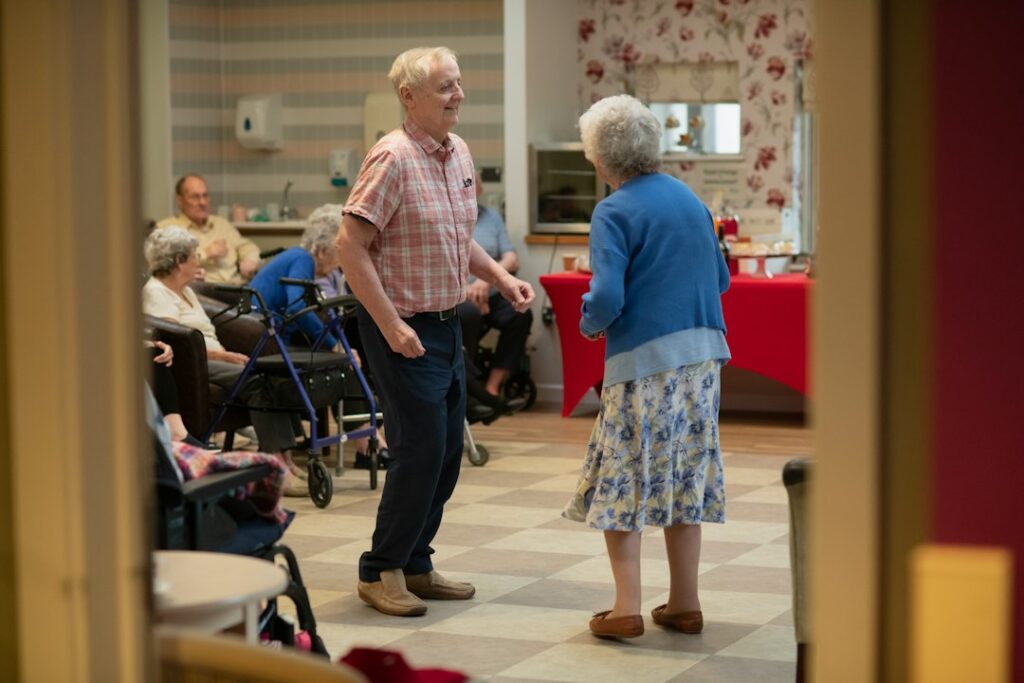
Assisted living can support an active lifestyle by combining regular movement, social connection, daily responsibilities, and meaningful activities in an environment designed around changing physical abilities. For residents in Palmyra, PA, this may include walking indoors during icy weather, joining group exercise, tending plants, participating in household routines, or spending time outdoors when conditions are comfortable.
An active lifestyle in assisted living does not mean intense workouts or constant activity. It means having regular opportunities to move, make choices, connect with others, and take part in daily life at a safe and manageable pace.
What does an active lifestyle mean in assisted living?
An active lifestyle includes more than formal exercise. It can involve physical, mental, social, and emotional engagement throughout the day.
Residents may stay active by:
- Walking to meals or activities
- Taking part in stretching, balance, or strength exercises
- Helping with light household tasks
- Joining games, discussion groups, or creative activities
- Spending time with friends and neighbors
- Choosing clothing, meals, schedules, or hobbies
- Going outdoors for fresh air and seasonal activities
This broader definition matters because a person who cannot participate in strenuous exercise may still benefit from frequent movement and purposeful engagement. Short walks, seated exercises, standing activities, and regular changes in position can all contribute to daily activity.
How do assisted living communities encourage regular movement?
Assisted living settings often make movement part of the daily routine rather than treating it as a separate task. Hallways, common rooms, dining areas, activity spaces, and outdoor areas may provide natural reasons to get up and move.
A typical day might include walking to breakfast, attending a morning exercise session, moving between activity rooms, and joining an afternoon social program. These small periods of activity can add up without requiring a resident to complete a demanding workout.
Exercise programs may include:
- Chair-based stretching
- Range-of-motion exercises
- Balance practice
- Light resistance exercises
- Walking groups
- Music-and-movement sessions
- Gentle dance or rhythm activities
The goal is usually to support strength, flexibility, balance, and confidence. Activities should be adapted to individual abilities. A resident may participate while seated, use a mobility aid, take frequent rest breaks, or complete only part of a session.
Why are strength and balance activities useful for older adults?
Strength and balance exercises can help residents maintain the abilities needed for everyday tasks. These may include standing from a chair, reaching into a cabinet, walking across a room, carrying a light object, or getting in and out of bed safely.
Maintaining leg and core strength can support mobility. Balance activities may help residents practice controlled movements and body awareness. Flexibility exercises can make reaching, turning, and dressing more comfortable.
Exercise does not eliminate the risk of falls, and it is not appropriate to assume that every resident should follow the same routine. Health conditions, medications, pain, vision changes, and past injuries all affect what type of activity is suitable. Personal limitations should be respected, and programs should be adjusted when needed.
How does assisted living support outdoor activity in Palmyra?
Seasonal conditions affect how residents spend time outdoors. In Palmyra, warmer months may provide opportunities for walks, gardening, outdoor conversation, or sitting in a landscaped area. During colder months, snow, ice, wind, and shorter daylight hours can make outdoor activity less practical.
Indoor walking routes and common areas can help residents remain active when outdoor surfaces are slippery or temperatures are uncomfortable. On mild days, residents may benefit from brief outdoor periods rather than long excursions. Shade, seating, water, appropriate clothing, and supervision can make outdoor activity more comfortable.
Seasonal activity may also include planting containers, observing birds, arranging flowers, or enjoying outdoor music. These activities encourage people to spend time outside without requiring extensive walking.
Can residents stay active if they use a walker or wheelchair?
Yes. Mobility equipment does not prevent a person from having an active lifestyle. It may provide the support needed to move safely and participate more independently.
A resident who uses a walker may join a walking group at a slower pace. Someone who uses a wheelchair may participate in seated exercise, upper-body movement, gardening from an accessible height, or group activities that involve reaching and coordination.
Accessible design also matters. Clear walkways, suitable seating, adequate lighting, handrails, and enough space for turning can make participation easier. A person may be physically able to join an activity but unable to do so if the space is crowded, difficult to enter, or lacks nearby seating.
How do social activities contribute to an active lifestyle?
Social participation encourages residents to leave their rooms, move through shared spaces, and maintain regular routines. It may also support emotional well-being, motivation, and a sense of belonging.
Conversation groups, card games, crafts, music programs, educational talks, and shared meals provide different types of engagement. Some activities are mentally stimulating, while others involve hand coordination, standing, walking, or light movement.
Social activity can be especially valuable for residents who are less likely to exercise alone. A scheduled group may provide encouragement and structure. However, participation should remain voluntary. Quiet time, privacy, and rest are also legitimate needs.
What daily activities help residents remain independent?

Routine tasks can support activity and independence when they are safe and appropriate. Residents may be encouraged to take part in decisions and tasks rather than having every step completed for them.
Examples include:
- Selecting clothing
- Organizing personal items
- Helping set a table
- Watering plants
- Folding towels
- Choosing a preferred activity
- Walking to a common area
- Participating in simple food preparation
- Keeping a personal calendar or activity schedule
The purpose is not to create unnecessary work. The purpose is to preserve familiar skills, encourage choice, and maintain a sense of usefulness. Assistance can be provided for the portions of a task that are difficult while allowing the resident to complete the parts that remain manageable.
What should families look for in an activity program?
Families can learn a great deal by asking how activities are adapted for different abilities. A strong program should offer more than a calendar filled with events. It should provide realistic options for residents with different mobility levels, health conditions, interests, and energy levels.
Useful questions include:
- Are activities available for residents who prefer seated participation?
- Are exercise sessions adapted for balance or mobility limitations?
- Is there a safe indoor walking option during poor weather?
- How are residents encouraged to choose activities?
- Are quiet or small-group options available?
- Can activities be adjusted when a resident is tired or experiencing pain?
- Are outdoor areas accessible and comfortable in different seasons?
The most meaningful activity program is one that respects individual preferences. A resident may be active through gardening, conversation, music, reading, walking, or helping with a familiar task. There is no single definition of participation.
How can residents build activity into an ordinary day?
Consistency is usually more useful than occasional strenuous effort. A resident might begin with a short walk, complete seated stretches before lunch, attend one group activity, and spend time socializing in a common area.
Rest periods should be part of the plan. Pain, dizziness, unusual shortness of breath, chest discomfort, or sudden weakness are reasons to stop an activity and seek appropriate medical guidance. Families and residents should also understand that activity plans may need to change after illness, hospitalization, surgery, or a medication adjustment.
Assisted living can encourage an active lifestyle by making movement, choice, and social participation part of ordinary daily routines. The most effective approach is individualized: safe enough to build confidence, flexible enough to accommodate changing abilities, and meaningful enough that residents want to take part.
